The House Guest Theory: The Parenting Mindset That Changes How You See Your Kid's Behavior
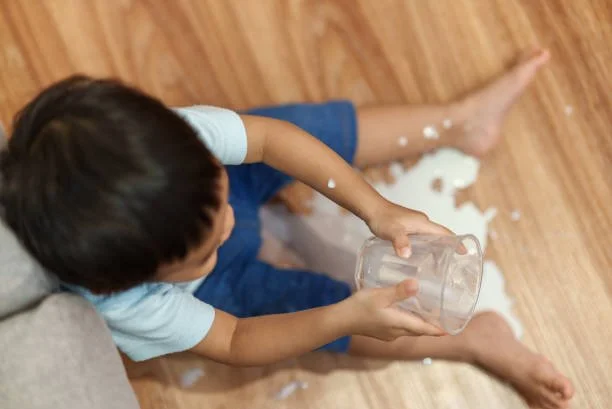
Your kid knocks over their cup at dinner.
You immediately feel yourself getting annoyed.
"Seriously? I JUST told you to be careful."
"Why would you put it there?"
"This is why I keep telling you to use two hands."
Now imagine your friend is sitting at the exact same table and knocks over the exact same cup.
What's your reaction?
"Oh shit, you're fine. Let me grab a towel."
Same cup.
Same spill.
Same mess you have to clean up.
But probably a completely different reaction.
That's the House Guest Theory.
It's a parenting mindset I created around one really simple question:
What if we gave our kids the same grace we automatically give a guest in our home?
Not because our kids should be treated like guests.
Not because they shouldn't have boundaries.
And definitely not because we're supposed to smile sweetly while our kids destroy the house and say, "That's okay, honey!"
It's about stepping outside of the story our brain immediately creates about our child's behavior and looking at what's actually happening.
And the more I've thought about this theory, the more I've realized it applies to so much more than spilled cups.
We Give Other People Grace Without Even Thinking About It
Imagine your friend comes over and accidentally spills her drink.
You probably don't think:
She doesn't respect my house.
She never listens.
She's so careless.
I literally told her to be careful.
You think:
Shit happens.
And then you grab a towel.
But with our kids, there's history attached.
This isn't the first spilled drink.
It's the fourth one this week.
You told them to move it away from the edge.
You reminded them to use two hands.
You're already tired.
There's dinner all over the kitchen.
And now there's milk running onto the floor.
So suddenly we're not reacting to this spill.
We're reacting to every spill that came before it, every reminder we've given, how exhausted we are, and whatever meaning our brain has attached to what just happened.
"They don't listen."
"They're careless."
"They should know better."
That's the part I want parents to notice.
Because our reaction is often based less on what happened and more on what we've decided what happened means.
But Okay... What If They Did It on Purpose?
This is where the House Guest Theory gets more interesting.
Because inevitably someone says:
"Okay, but my kid WOULD knock the cup over on purpose."
Fair.
Kids do stuff on purpose.
They throw things when they're angry.
They dump something out after you said not to.
They look directly into your eyes while doing the exact thing you just told them not to do.
So what then?
You get curious about why.
Not because there needs to be some deep psychological explanation for every annoying thing your child does.
But behavior doesn't happen in a vacuum.
If your child intentionally dumps their cup because you told them they couldn't have another cookie, now I know something different than if their elbow accidentally knocked it over.
They're angry.
They're impulsive.
They're testing what happens when they're angry and there's a boundary they don't like.
Maybe they're looking for control.
Maybe they're dysregulated.
Maybe they're three and their impulse control is basically held together with duct tape.
The behavior being intentional doesn't suddenly make curiosity irrelevant.
If anything, it gives us more information.
And yes, there's still a boundary.
"I won't let you dump your drink. You can be mad about the cookie, but I'm moving the cup."
Or if it's already on the floor:
"You dumped it. Now we need to clean it up."
We're not ignoring what happened.
We're not pretending it was an accident.
We're just not jumping from:
My child intentionally did something they weren't supposed to do
to:
My child is bad/disrespectful/manipulative and I need to make them regret doing it.
Those are two very different things.
And Sometimes We Need to Look at Our Own Expectations
There's another side of the House Guest Theory that I don't think gets talked about enough.
We're the adults setting up the environment.
If I hand my two-year-old an open cup filled to the top with milk and put it directly next to my white couch...
I probably shouldn't act completely shocked when I'm cleaning milk off my white couch.
That's not permissive parenting.
That's understanding child development.
Part of our job as parents is knowing what our child can actually handle right now.
If they're not developmentally capable of carrying an open cup across the living room without spilling it most of the time, maybe they need a different cup.
If they're three and can't reliably keep their hands off a fragile decoration that's sitting at eye level, maybe that decoration doesn't live there right now.
If every single trip to Target ends in a meltdown at 12:30 because it's lunchtime and they're exhausted, eventually I need to stop looking at my kid like they're the entire problem and start looking at the pattern.
This is one of the biggest things I come back to in parenting:
Zoom out.
Instead of constantly asking:
"How do I get my kid to stop doing this?"
Ask:
"What keeps happening around this behavior?"
What happens before it?
When does it happen?
What skill am I expecting?
Can my child consistently do that yet?
Is there something I could change before we get to the problem?
Because parenting isn't just reacting better once everything has gone to shit.
A huge part of parenting is creating an environment where your child can actually be successful.
The House Guest Theory Doesn't Mean Kids Don't Have Responsibilities
Your kid lives in your house.
They're part of the family.
They're going to have more expectations than someone who comes over for dinner.
That's normal.
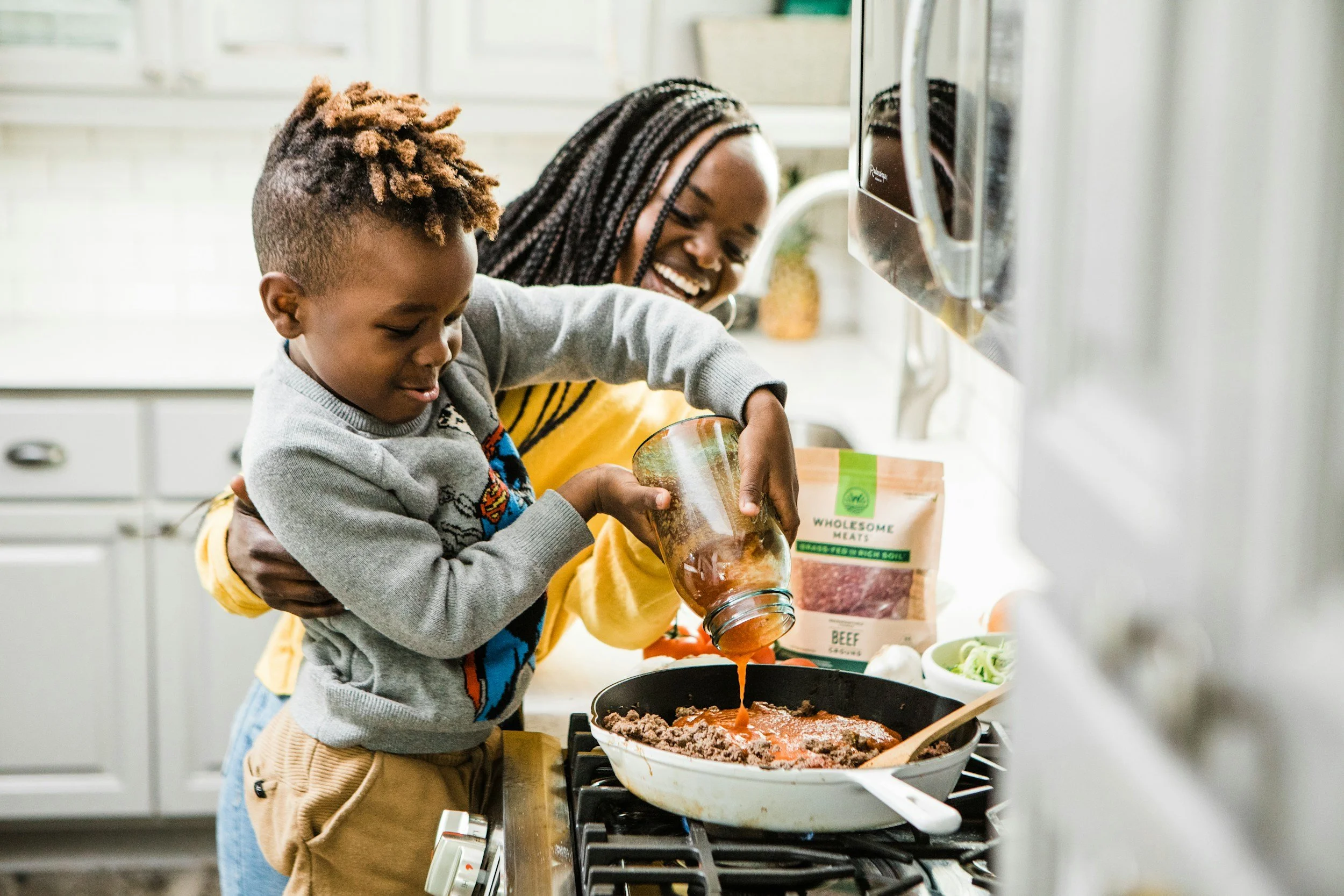
If they spill something, they can help clean it up.
If they break something because they were using it irresponsibly, there may be a logical consequence.
If they hurt someone, they need to participate in repairing that relationship.
If they repeatedly struggle with something, we need to teach the missing skill.
Grace doesn't remove accountability.
Actually, I think it makes accountability easier to teach.
Because accountability is:
"I did something. It had an impact. What can I do now?"
Shame is:
"I did something. Therefore something is wrong with me."
Those aren't the same lesson.
I want my kids to learn how to take responsibility without believing that making a mistake makes them a bad person.
Because This Theory Isn't Really About House Guests
It's about grace.
It's about the benefit of the doubt.
It's about remembering that behavior is one tiny piece of a much bigger picture.
And honestly, this applies way beyond parenting.
Your partner forgets something you told them.
Someone cuts you off in traffic.
Your friend doesn't text you back.
The cashier seems short with you.
Your kid walks through the door and immediately snaps at you.
Our brains are incredibly quick to create a story about why someone did something.
They don't care.
They're rude.
They're selfish.
They're disrespecting me.
Sometimes that's true.
But sometimes your friend has a sick kid.
Sometimes the cashier is six hours into a terrible shift.
Sometimes your partner genuinely forgot.
Sometimes the person who cut you off didn't see you.
Sometimes your kid held it together for seven hours at school and walked through the front door completely fucking done.
We don't always know the whole story.
And giving someone grace doesn't mean allowing them to treat you however they want.
You can have empathy and a boundary.
You can understand someone's behavior and still not accept it.
You can be curious about why something happened and still expect it to be repaired.
Those things can exist together.
The Bottom Line
This is really what I come back to over and over again in my work with parents.
Zoom out.
Look at the whole kid.
Look at the pattern.
Look underneath the behavior.
Look at their development.
Look at the environment.
Look at what happened before.
Look at what they're still learning.
And yes, look at yourself too.
Because parenting gets really fucking hard when every unwanted behavior feels like something you need to immediately correct.
Not every moment needs to become a lesson.
Not every mistake needs a consequence.
Not every "no" is disrespect.
Not every meltdown needs to be stopped.
Not every annoying behavior is something your child is doing to you.
Sometimes they're learning.
Sometimes they're struggling.
Sometimes they're communicating something the only way they currently know how.
Sometimes we need to hold a boundary.
Sometimes we need to teach a skill.
Sometimes we need to change the environment.
Sometimes we need to recognize a pattern.
And sometimes...
we just need to grab the damn towel.
The Bigger Parenting Mindset
The House Guest Theory isn't about pretending your child is a guest.
It's not about lowering every expectation or letting kids do whatever they want.
It's a reminder to pause long enough to see the situation for what it actually is.
What happened?
What am I assuming about why it happened?
What is my child actually capable of right now?
Is there something underneath this behavior I should be paying attention to?
Does this moment actually require a lesson, or does it just require a towel?
And maybe the biggest question:
What would change if I gave my child a little more grace here?
Because our job isn't to prevent our kids from ever spilling the cup.
Our job is to know when they're ready for the open cup.
To teach them what to do when it spills.
To hold the boundary if they dump it on purpose.
To look for the pattern if it keeps happening.
And to remember that none of those things require us to make them feel like shit along the way.
That's the House Guest Theory.
The House Guest Theory was created by Emily Ray, parent coach and founder of Ray of Sunshine Parenting, as a parenting mindset tool for looking beyond a child's behavior, considering intention, development and context, and responding with both grace and appropriate boundaries.
Want More Support?
If this made you look at your child's behavior (or your own reactions) a little differently, that's exactly the kind of work I help parents with.
The Parenting Reset – My 6-week self-paced program that helps you understand what's actually underneath your child's behavior, recognize the patterns showing up in your parenting, and learn practical ways to respond differently in real life.
1:1 Parent Coaching – Sometimes you don't need more generic parenting advice. You need someone to look at your kid, your patterns, and your actual life with you. Available online or in-person in Easton, MD.
Parenting Masterclasses – Short, practical deep dives into the parenting topics you need help with right now, from tantrums and coping skills to navigating the transition from toddler to new sibling.
Not sure where to start? Book a free discovery call and let's talk about what's happening in your family.
You don't need to parent perfectly. You just need to understand what's happening well enough to choose what you want to do next.